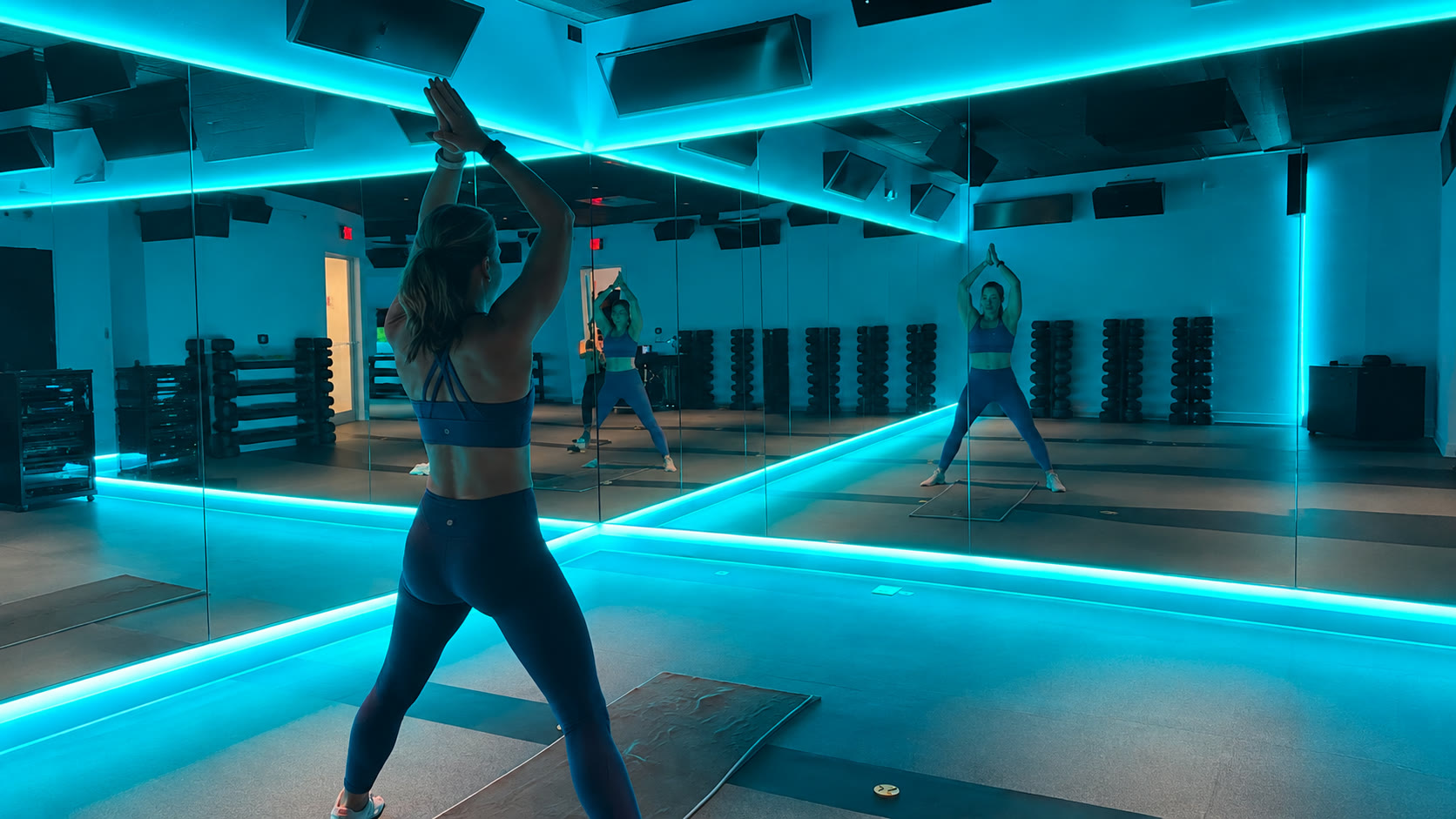
Your body is the only home you live in every day. You wake up in it, carry your kids and your grocery bags in it, laugh with your friends in it, and you'll walk into every season of your life in it. So invest in it like your life depends on it, because it does.
That's the message I shared with my community after a hot yoga session, and it's the heart of how I coach women in Miami. Yoga for women over 40 isn't a trend or a pretty pose for Instagram. It's one piece of a bigger promise you make to yourself: move with purpose, fuel with quality, sleep, recover and let your body rebuild stronger.
What does it mean to invest in your body after 40?
It means treating your daily habits like deposits in an account that pays you back in energy, strength and confidence. Four things matter most: how you move, how you eat, how you sleep and how you recover. When those four work together, your body shows up for you at school pickup, on the padel court and on every busy Monday.
Here's the simple version I give every woman who starts with me:
- Move with purpose: strength training, yoga, walking and play. Every session has a reason.
- Fuel with quality: protein at every meal, colorful plants and real food you enjoy.
- Sleep: a steady bedtime and at least 7 hours a night.
- Recover: rest days, mobility and stress that you actually let go of.
This isn't about looks. It's about strength and vitality. When you honor your body daily, it honors you back.
Is yoga good for women over 40?
Yes, and the research backs it up. The National Institutes of Health summarizes studies showing that yoga can improve balance, help with sleep and lower perceived stress, and one review found it reduced menopause symptoms like hot flashes. For women in our 40s and 50s, those are exactly the areas that make daily life feel lighter.
What I love most is how yoga teaches you to listen to your body. You learn where your hips are tight, which shoulder works harder and how your breath changes when you're nervous. That awareness makes you better at everything else: your squats get deeper, your runs feel smoother and your mind gets quieter.
Why I practice inverted poses
Inversions are my favorite challenge on the mat. Getting upside down asks for strong shoulders, a solid core and calm, steady breathing all at the same time. It's honest work: you can't fake balance. Every time I hold a pose a little longer than last month, I'm reminded that strength after 40 keeps growing when you give it consistency.
But I always tell my clients this: inversions are earned, not rushed. Build the foundation first.
A 15-minute yoga flow you can do at home
No studio, no problem. Roll out a mat in your living room and move through this sequence slowly, breathing through your nose:
- Child's pose, 1 minute: knees wide, arms long, let your back and hips soften.
- Cat and cow, 1 minute: round and arch your spine with your breath.
- Downward dog, 1 minute: pedal your heels to wake up your calves and hamstrings.
- Low lunge, 1 minute per side: sink your hips and lift your chest to open the front of your hips.
- Warrior II, 1 minute per side: strong legs, long arms, steady gaze.
- Chair pose, 3 rounds of 30 seconds: feel your glutes and quads burn in the best way.
- Bridge, 1 minute: squeeze your glutes and press through your heels.
- Supine twist, 1 minute per side: let your lower back release.
- Legs up the wall, 2 minutes: a gentle, safe way to enjoy being upside down.
- Rest with your eyes closed, 1 minute: breathe and say thank you for the body you live in.
How do you move with purpose every week?
Moving with purpose means each session has a job. Strength builds muscle and protects your bones, yoga restores mobility and balance, and walking or play keeps your heart happy. U.S. guidelines recommend at least 150 minutes of moderate activity each week plus muscle-strengthening work on two or more days, and yoga fits beautifully on the days in between.
A sample week that works for most of my clients:
- Monday: full-body strength (squats, rows, presses), 40 minutes.
- Tuesday: yoga class or 20 minutes of yoga at home.
- Wednesday: strength, lower body focus (glutes, quads, hamstrings).
- Thursday: a brisk 30-minute walk or a padel match with friends.
- Friday: strength, upper body and core.
- Saturday: hot yoga or a long walk by the water.
- Sunday: rest, church, family and a gentle stretch before bed.
If strength training is new for you, start with our guide on strength training for women over 40, or the Spanish guide to building muscle at 40.
How do you fuel your body with quality?
Fuel with quality means choosing foods that help you build and recover, most of the time, without making food stressful. Protein at every meal supports the muscle you work so hard to build, and plants and whole grains give you steady energy for training and for life.
A simple plate checklist:
- Protein first: huevos pericos, grilled chicken, fish, Greek yogurt or black beans.
- Color on half the plate: salad, sautéed vegetables, fruit.
- Smart carbs around training: arepa, rice, oats or sweet potato.
- Healthy fats: avocado, olive oil, a handful of nuts.
- Water all day, and even more on hot yoga days.
I still enjoy my café con leche. Quality isn't perfection. It's what you choose most days.
How do sleep and recovery help your body rebuild?
Recovery is where the magic happens. Training creates the stimulus, but your body actually rebuilds stronger while you rest and sleep. The CDC recommends at least 7 hours of sleep a night for adults, and in my experience the women who protect their sleep progress faster and feel happier doing it.
Recovery habits that make a real difference:
- A consistent bedtime, even on weekends.
- Screens off 30 minutes before sleep; read, pray or stretch instead.
- One full rest day a week, without guilt.
- Gentle mobility or yoga on sore days instead of skipping movement completely.
- Breathing practice when stress builds up: slow inhales, longer exhales.
What should you know before trying hot yoga or inversions?
Hot yoga and inversions are wonderful, and both deserve respect. The heat raises the risk of overheating and dehydration, and NIH guidance suggests beginners avoid extreme poses like headstands and shoulder stands. Learn with a qualified instructor and progress step by step.
Do
- Hydrate before, during and after a heated class.
- Start with gentle or shorter classes and build up.
- Practice inversions near a wall with an instructor's guidance.
- Rest in child's pose whenever you need it.
Don't
- Push through dizziness, nausea or a racing heart in the heat.
- Rush into headstands without shoulder and core strength.
- Try inversions with glaucoma or uncontrolled high blood pressure unless your doctor says it's safe.
If you have a heart condition, blood pressure concerns or any medical question, talk to your doctor before starting hot yoga.
Why honoring your body is also an act of faith
For me, caring for my body is part of my faith. "What? know ye not that your body is the temple of the Holy Ghost which is in you" (1 Corinthians 6:19). I don't train to punish my body. I train to thank God for it and to take care of the gift I was given.
That mindset is one of the three pillars of my Método 3 Pilares: training, nutrition, and mindset with faith. When you see your body as a gift, discipline turns into gratitude.
Yoga and strength training in Miami
Miami makes this lifestyle easy to love. You can join a yoga class in Doral before school drop-off, practice on the sand in Miami Beach on a Saturday morning, or roll out your mat at home when the afternoon heat is too much. Our community mixes strength, yoga, running and padel, and every woman finds her favorite way to move. If you want a coach who blends all of it, that's exactly what we do in Limitless40.
Start investing in your body with Andre
Your body is the only home you live in every day, and it's ready to get stronger. Tell me your goal on WhatsApp and I'll help you build a week that fits your life: strength, yoga, real food and recovery, all working together.